


Looking to start experiencing the outdoors in a kayak?
We’ve chosen five of the best kayaks available to suit a variety of needs.
Read on to learn about whether you want a hard shell, inflatable or touring kayak as well as what’s going to suit your pocket best.
Read Next: Our top picks for inflatable kayaks.
Please note: This post may contain affiliate links, which means we may receive a commission, at no extra cost to you, if you make a purchase through a link. Please see our full disclosure for further information.
Top Kayaks (Comparison Table)
Table could not be displayed.
Best Kayaks
Best Beginners Kayak: No products found.
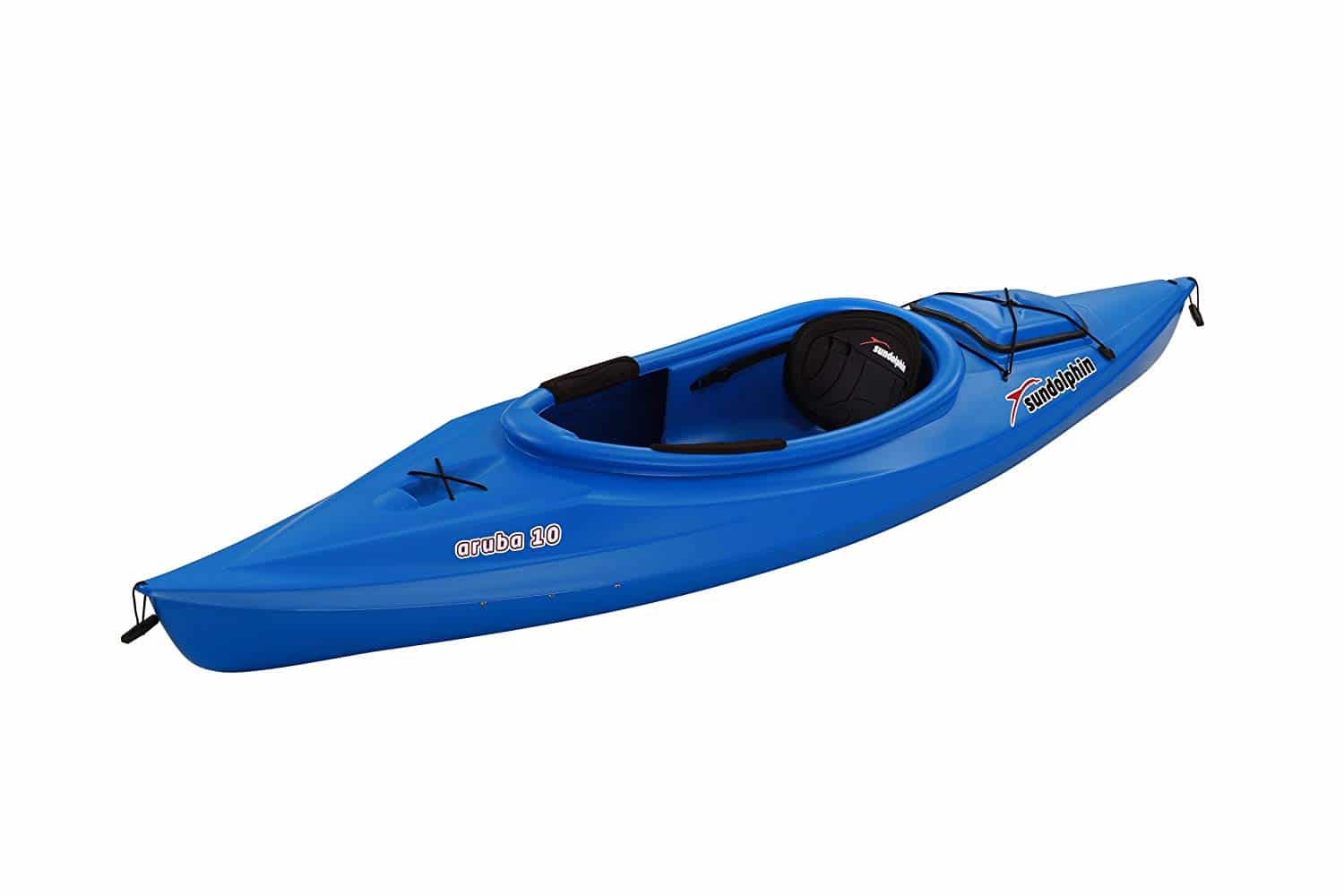
The Sun Dolphin Aruba is a good beginner kayak, since it’s light and portable, inexpensive, and has a durable body.
We found that the UV-stabilized Fortiflex High Density Polyethylene body could be dragged over almost any terrain with minimal damage. This allows anyone to transport the kayak to the water easily. A huge plus is that a hard-body kayak also doesn’t need to be cleaned before being stored.
This kayak has what’s called a “sit-in” style, which leaves more room for dry storage. We also found that the “sit-in” style makes it easier to manoeuvre more intuitively, using your body’s weight, rather than using the paddles. The seat is also comfortably padded and can be adjusted for your length.
This kayak is perfect for calmer rivers and lakes (in other words, it’s a touring kayak). We dragged it to the lake a few yards away and went for a late afternoon paddle to destress. It’s so easy and simple to use.
The storage offered is ample, but we found that we could only really access it on the shore or if someone paddled up next to us and got what we needed, since it’s behind you. It stays completely dry in spray, unless you tip over completely. When submerged, the seal doesn’t hold as well as we might have liked.
Our favourite thing about this kayak is that at only 40 pounds, it was really easy to move and use at a moment’s notice. We had no trouble lifting it into a truck bed or on top of an SUV (using a ladder).
At a glance...
- Durable body that will last for years
- Light enough for most adults to handle and transport
- Dry storage
- Adjustable padded seat and foot braces for comfort
- Good touring kayak
Best Inflatable Kayak: No products found.

The No products found. is a great choice for anyone who doesn’t live close to the coast and doesn’t have enough space to store a hard-body kayak in their garage. It’s easy to inflate and can be customised to fit up to three people or one person with a lot of gear.
For flexibility and a range of options the Sea Eagle 370 offers a dependable solution. This inflatable kayak packs up into a bag that will fit into any car, making it easy to transport. If you’d like to be able to invite a weekend warrior to join you, simply add an extra seat.
Because of the space and stability the Sea Eagle provides, it’s a good option for going fishing. Just be careful with hooks and knives since they could give you a puncture. Otherwise, we found that the hull holds up well against rocks and pebbles on the beach.
The set up and disassembling process is relatively easy, but it does take at least thirty minutes, and you will have to clean the boat before storing it to protect against mould.
The two skegs on the bottom provided tracking and probably helped our speed. But you will find yourself going slower than in a hard-body kayak. We also missed having foot paddles to brace against.
Overall this kayak is a good option for both less experienced and regular sea-paddlers. We recommend it if you want to buy a less expensive and novice-friendly kayak for occasional use. We also think more experienced boaters who want to be able to have a large kayak with plenty of space and ease of transport will enjoy this kayak.
At a glance...
- Offers flexibility: 1, 2, or 3 people on board
- Folds up small and makes storage easy
- Stable and comfortable
- Two skegs for provide tracking and speed
- Good sea-going kayak
Best Value Kayak: No products found.
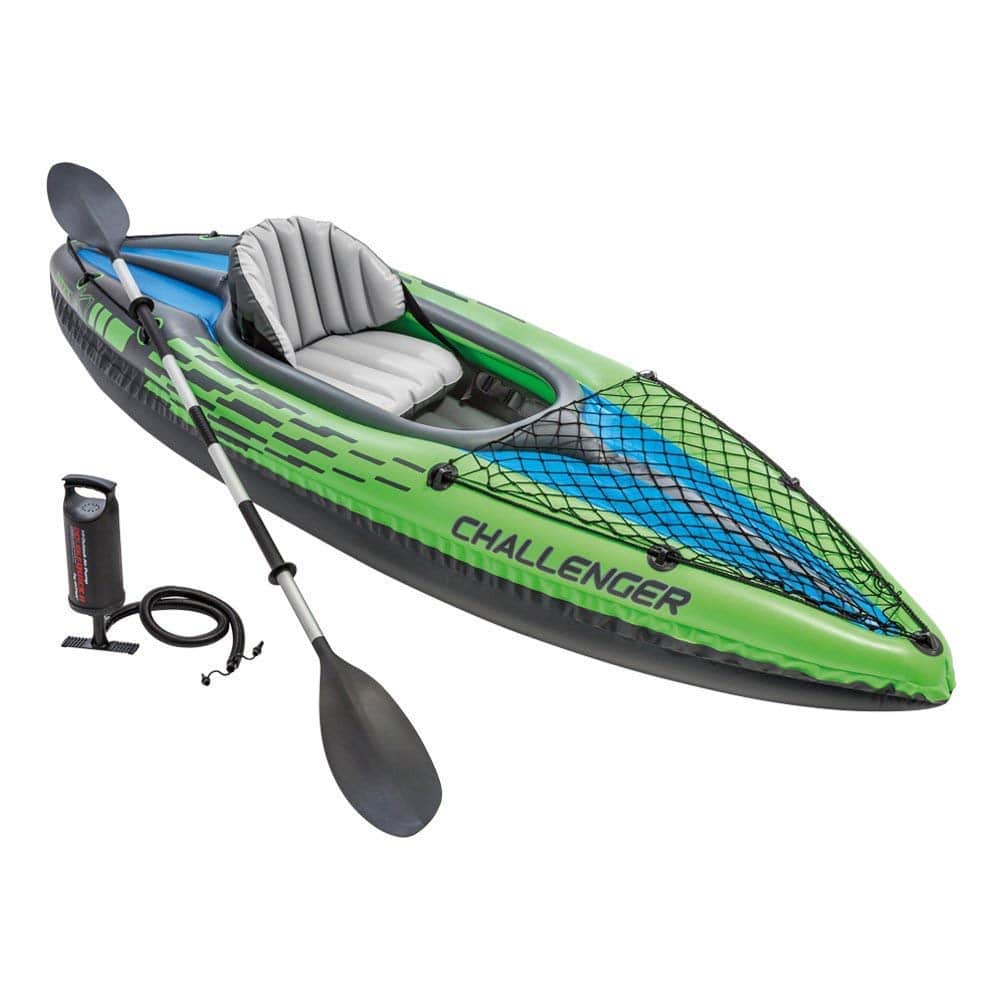
The No products found. is more of a touring kayak for lakes and rivers, but works well in the sea too. We would recommend it for intermediate boaters who want to go out alone and move fast.
We found that once you’ve figured out how to do it, inflating this kayak takes less that 5 minutes. You’ll be ready to head out after 10 minutes of unloading it from your car.
The inflatable seat is very comfortable and the vinyl is strong enough to scrape on a shallow bottom without any problems. A sharp stick or rock might be a problem, but patching is very easy.
If you do go out on choppier water you’ll be happy to know that speed and tracking are excellent for an inflatable. You’ll also easily be able to get back in if the kayak capsizes.
It does need to be cleaned and dried off after every use. This maintenance is routine with an inflatable kayak.
This kayak is light and simple to use. It’s perfect for one person, especially someone without much space at home, a smaller car, or as a second kayak for visitors.
At a glance...
- Fast and easy handling
- Cargo net for storing gear
- Comes with a pump that works really well
- Fast assemble and disassemble
- Good inflatable touring kayak
Best Children's Kayak: No products found.
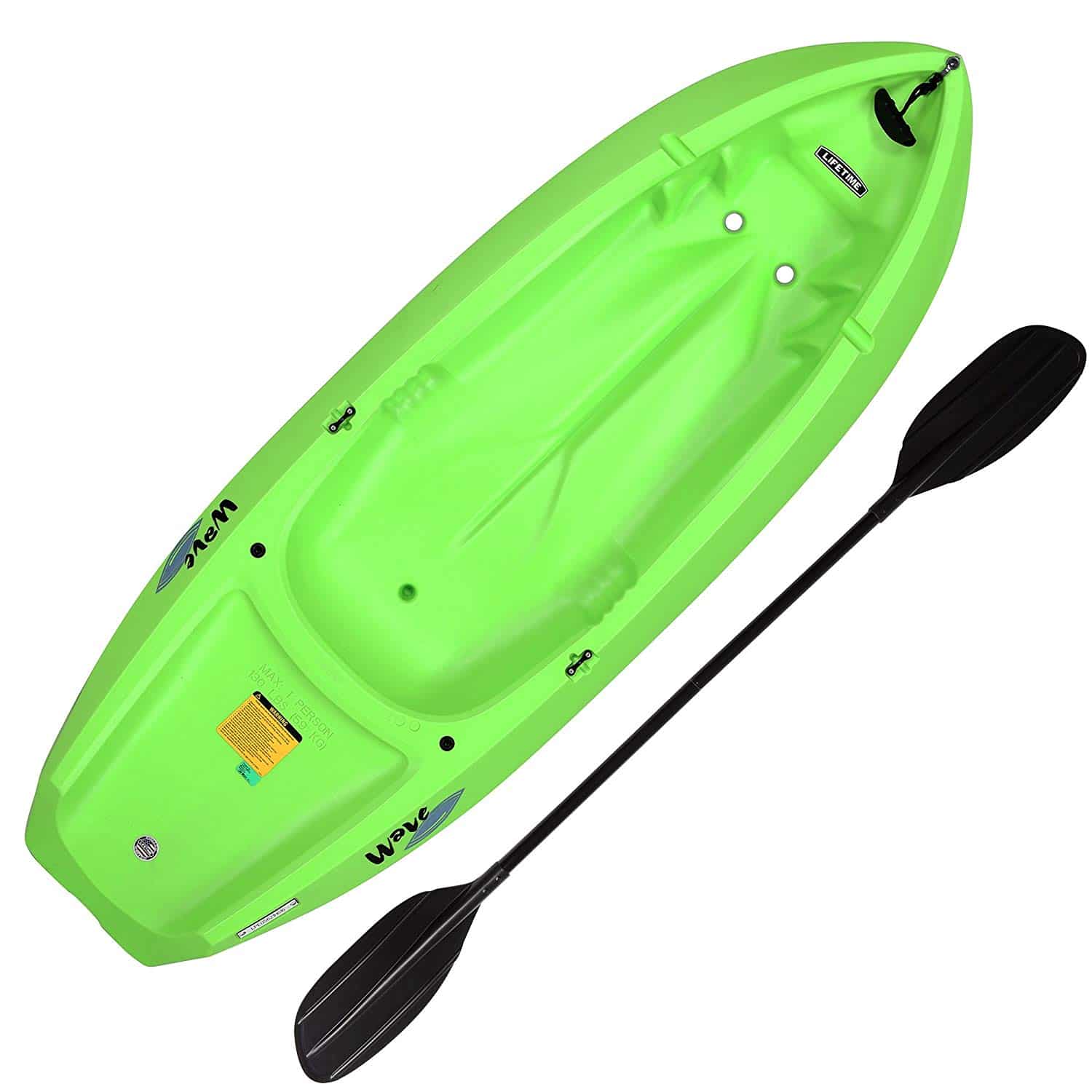
This No products found. kayak is designed for kids aged 5 and up. It’s easy to handle, durable, and safe.
The weight limit is 130 pounds, but there’s no limit to how early a child can start. As soon as you feel your child is ready to paddle themselves, this kayak is the ideal first experience.
This kayak will also be able to handle two smaller children sitting in it together, especially if they’re being towed.
The weight might be too much for a smaller child to carry around on their own. But once an adult has launched the kayak it’s easy to manoeuvre. We recommend starting on lakes and rivers, as this is a touring kayak.
It’s easy to climb back into the kayak after tipping or falling out. The centre of gravity is set up to be extremely stable. This means your child can sit or stand with full confidence that they won’t capsize.
The handling is easy and intuitive. You might struggle to keep up once they get the hang of it!
This kayak is a great introduction to a sport that will return a lifetime of happy memories. We would recommend it as a starting kayak for any youngsters interested in getting on the water.
At a glance...
- Durable body that will take all kinds of abuse
- Stable, difficult to capsize and easy to climb back on to
- Light and small
- Handling is easy to get the hang of
- Good first kayak
Best Fishing Kayak: No products found.
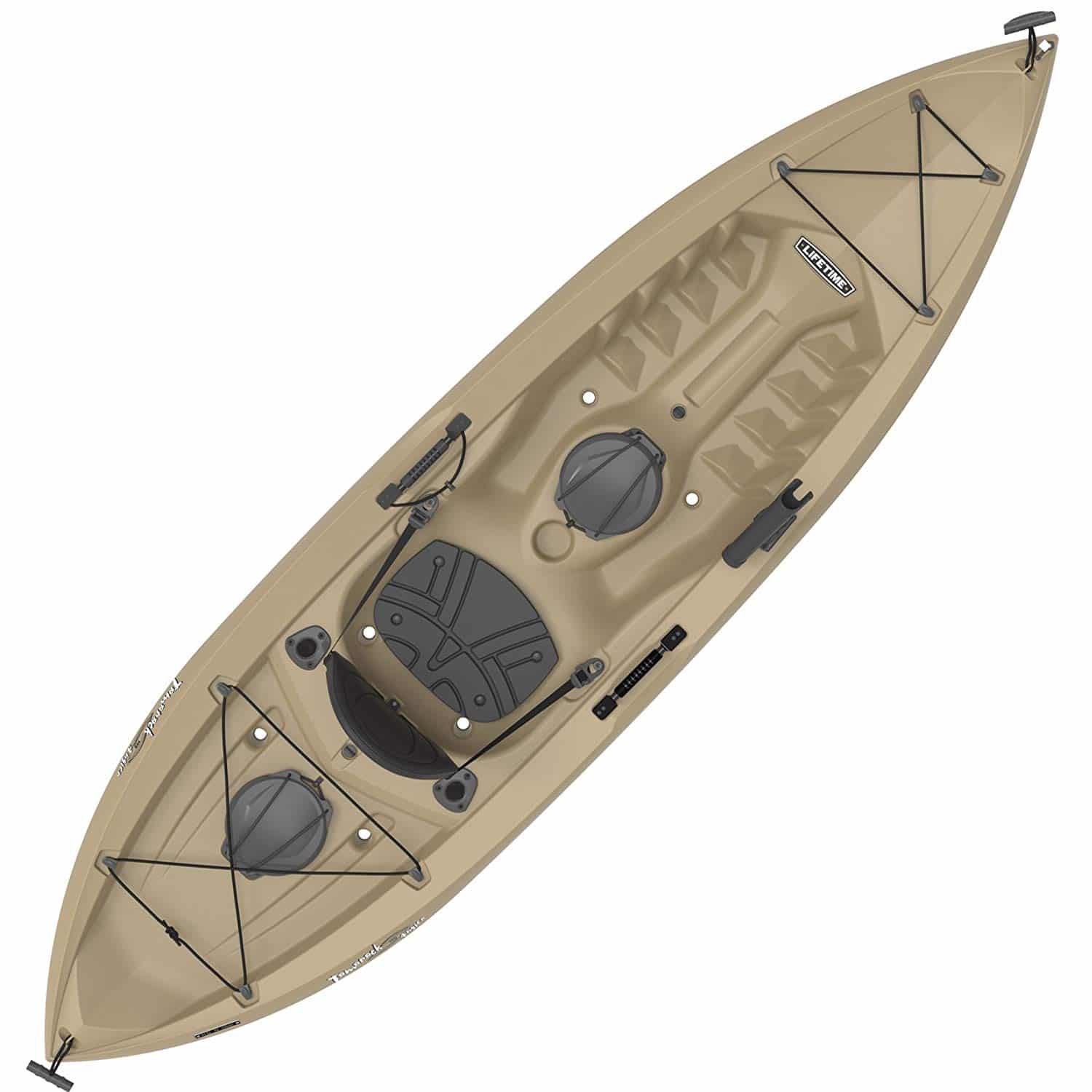
No products found. is a stable kayak designed for fishing. It’s a “sit-on-top” style and can accommodate a lot of gear.
This kayak performs well in lakes and rivers, with decent speed, great stability and excellent tracking. We were able to comfortably cast from on board while sitting. The higher up “sit-on-top” style makes casting easy. If you’re confident enough to stand the kayak should be stable enough.
There are two flush mounted fishing rod holders that work well, although if you’re short you might find the placement difficult to reach. There are also two storage compartments that are easy to access.
The UV-Protected High-Density Polyethylene body will last a long time and require almost no maintenance. We can see this kayak being a long term buy.
We found the adjustable seat comfortable, but you might want to add some cushioning if you’re going to be on the water for hours at a time.
This kayak’s stability doesn’t stop it from being responsive and easy to use and steer. We would use it for an afternoon paddle on the river, since it doesn’t feel like a slow fishing kayak.
You will need a rack to transport this kayak, or else a space close to shore to store it.
This kayak is a great all-round buy. We recommend it for Yak anglers as well as someone looking for a stable and reliable kayak to use for the occasional fishing trip.
At a glance...
- Sit-on-top style that is perfect for fishing
- Loads of room to store gear
- Great stability and excellent tracking
- Very durable
Buyer's Guide for Kayaks
There are an overwhelming about of choices available when choosing a kayak, and it can be difficult to wade through all the information. The most important part is figuring out what will best suit your needs.
Inflatable vs hard-body kayak
When looking at a hard-body vs an inflatable kayak there are several factors to consider:
Are you going to be able to store the kayak close to the water, or will you need to transport it every time you need to use it?
For those who live close to the dam or river that they plan to kayak on, a hard body kayak is often the better choice. Although they are heavier, because it’s not a question of driving 700 miles once a year to the water, the weight isn’t as important.
A hard-body can be stored on the banks of the river or in a garage. If you’re staying in a fairly small space, even if it’s close to the water, you might need to consider something that can fold up small like an inflatable kayak.
Level of Use
If you’re planning to go out every afternoon, an inflatable kayak that needs to be assembled will be frustrating. You need something that makes “grab and go” easy.
Speed
If you’re looking for a relaxing cruise down the river, you’ll need something different from someone planning to train for triathlons. A wider, more stable kayak (whether it’s hard body or inflatable) will be much slower than a narrow kayak.
Sea-worthiness
All water falls within classes. Familiarise yourself with your local body of water and find a kayak that is appropriate. Most gentle rivers and lakes fall into water class 1. For a sea faring vessel, you’ll need something that is appropriate for class 3 and 4.
Maintenance
An inflatable kayak needs to be wiped down and cleaned after every use. It might also need to be patched occasionally and eventually replaced.
A hard-body kayak, on the other hand, can last years. It doesn’t need much maintenance and can be repaired by anyone handy.
Weight and Length
When looking at kayaks you will need to consider storing space for the kayak, but also for yourself. Are you tall, or do you plan to bring a lot of gear with you on paddling trips? If so, you’ll need to be sure that your kayak suits your needs.
Fishing or Touring
A kayak designed for fishing will have a lot of extra features that a touring kayak will not have. This includes rod stands, storage space, and simply the stability of the kayak itself.
If you’re more interested in going touring than fishing, these features would be unnecessary. A simple touring kayak might suit your needs better.
Tracking and Speed
It’s worth while to do some research about the tracking and speed that a kayak can offer.
A kayak that has good tracking will keep moving in along the course you were headed even if you stop paddling. It can help you keep on course, which ups your speed.
On the down side, it’s more difficult to manoeuvre. If you’re looking to train with your kayak, then good tracking is key. If you’re looking for a relaxing ride, then it’s less important.
Love Pinterest? Pin It!
You may also like...

The 8 Best Non Inflatable Paddle Boards for Beginners
Hard paddle boards, now also referred to as non inflatable paddle boards,

Salary of a Scuba Diving Instructor
Do you dream of living in paradise and teaching people how to

5 Best Prescription Scuba Masks

Inflatable Paddle Board Care, Maintenance, and Repair
Every amazing paddling season has to come to an end, and winter
Learn Paddle Board Surfing in 7 Easy Steps
The secret is out on paddle board surfing and more people than